
|
Sai Vichaar 01.Feature of the Week 02.Contributed Article 03.Experiences of Devotees 04.Devotees Say 05.Sai Activities 06.Prayer Club 07.Quote of the Week 08.Question of the Week 09.Subscribe to Sai Vichaar 10.Email Newsletter to a friend 11.Submit Articles to Sai Vichaar 12.Un-Subscribe Sai Vichaar 13.From the Editor's Keyboard 14.Disclaimer From the Editor's Keyboard... Sai devotees posting prayer request are requested to state their needs briefly and be specific about their prayer needs. This will help with good use of space and allows more requests to be posted every week. The "Question of the week" for this week is Sri Saibaba said, "Purification of mind is absolute necessity for the spiritual growth, without this all sadhanas are of no use" - Comment? Humbly Yours, The Editor
Disclaimer Sai Vichaar is devoted to the philosophy and teachings of Shri Sadhguru Sai Baba of Shirdi, and will take every measure to avoid topics or themes contradicting the same. Sai Vichaar team or saibaba.org is not responsible for the opinions expressed by individual contributors.
|
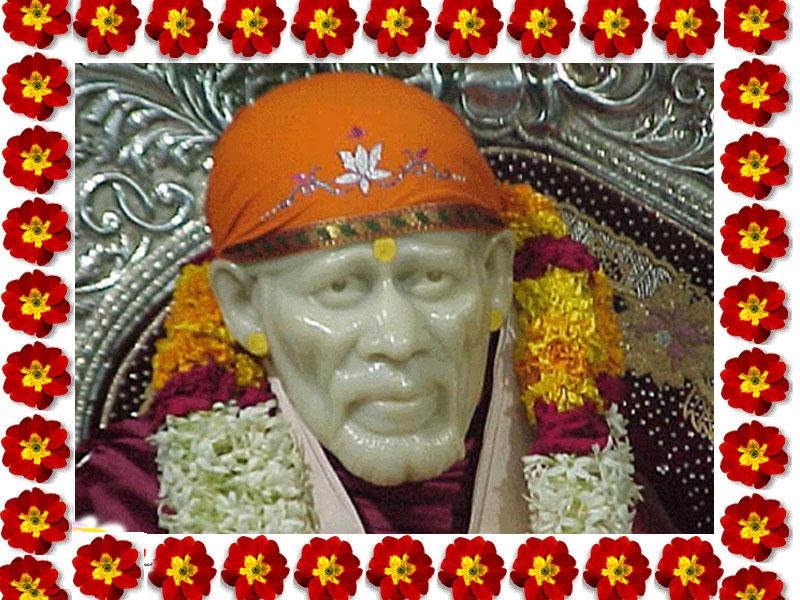 Feature of the week:
Flower without fragrance!
Feature of the week:
Flower without fragrance!
Knowledge without experiencing is no knowledge at all. This is in essence purports the advaitic philosophy of realizing the nature of Sai. While the statement not necessarily derogates the pursuit of knowledge whether it is from scriptures or Sadguru, it does points out to the limitations of the knowledge. Examples are abounding in the scriptures pointing to how great people even with all the knowledge could not accomplish the purpose of their pursuit. Knowledge is the entity gained by the outward pursuit of mind whereas the experience is the inward investigation. It is of utmost importance for a seeker to know the distinction between the two. Knowledge as a function of logic is easily explained while experience remains with the self, only to be experienced! Does the inability to explain the experience mean that it does not exist? Absolutely not. One of the most eloquent and illuminating commentaries on the experience of the self can be found in "Tripura Rahasya", when the woman ascetic spoke to Ashtavakra in King Janaka's court: "Hearing it a thousand times over will be useless unless one verifies the teachings by means of investigation into the Self with a concentrated mind. Just as a prince labors under a misapprehension that the string of pearls still clinging to his neck has been stolen away by another and is not persuaded to the contrary by mere words but only believes when he finds it around his neck by his own effort so also, O youth, however clever a man may be, he will never know his own self by the mere teaching of others unless he realizes it for himself. Otherwise he can never realize the Self if his mind is turned outward. A lamp illumines all around but does not illumine itself or another light. Things shine in sunlight without the necessity for any other kind of illumination. Because lights do not require to be illumined, do we say that they are not known or that they do not exist? Therefore, as it is thus with lights and things made aware by the conscious self, what doubt can you have regarding abstract consciousness, namely the Self? Lights and things being insentient cannot be self-aware. Still, their existence or manifestation is under no doubt. That means they are self-luminous. Can you not similarly investigate with an inward mind in order to find out if the all-comprehending Self is conscious or not conscious? That Consciousness is absolute and transcends the three states (wakefulness, dream and slumber) and comprises all the universe making it manifest. Nothing can be apprehended without its light. Will anything be apparent to you, if there be no consciousness? Even to say that nothing is apparent to you (as in sleep) requires the light of consciousness. Is not your awareness of your unawareness (in sleep) due to consciousness? If you infer its eternal light, then closely investigate whether the light is of itself or not. Everybody falls in this investigation however learned and proficient he may be, because his mind is not bent inward but restlessly moves outward. As long as thoughts crop up, so long has the turning inward of the mind not been accomplished. As long as the mind is not inward, so long the Self cannot be realized. Turning inward means absence of desire. How can the mind be fixed within if desires are not given up? Therefore, become dispassionate and inhere as the Self. Such inherence is spontaneous (no effort is needed to inhere as the Self). It is realized after thoughts are eliminated and investigation ceases. Recapitulate your state after you break off from it, and then will know all and the significance of its being knowable and unknowable at the same time. Thus realizing the unknowable, one abides in immortality for ever.
Contributed Article: Vidyananda - The Bliss of Knowledge
In this chapter the bliss experienced by a person who has attained the knowledge (realization) of Brahman through one of the three paths described in the preceding three chapters, namely, the practice of yoga, discriminative knowledge of the Self, and constant contemplation of the unreality of duality, is described.
The happiness arising from external objects is a modification of the intellect. Similarly, the bliss arising from the realization of Brahman is also a modification of the intellect. This bliss has four aspects. These are, absence of sorrow, the fulfillment of all desires, the satisfaction of having done all that had to be done, and the feeling of having attained the goal of life.
The jiva identifies himself with the subtle and gross bodies and thinks of himself as an agent (doer) and an enjoyer. The names and forms in the universe are looked upon as objects of enjoyment. When the jiva realizes that he is the supreme Brahman and gives up identification with the bodies, there is neither enjoyer nor objects of enjoyment. It is the identification with the bodies that is the cause of all desires, since all desires are for the comfort of the body. Sorrow results when a desire is not fulfilled. The knower of Brahman realizes that worldly objects have no reality and so he has no desire for them.
Just as water does not stick to the leaves of the lotus, actions performed after realization do not attach to the knower, because actions are performed by the body and the knower of Brahman has no identification with the body. The accumulated actions (sanchita karma) are burnt by the fire in the form of the knowledge of Brahman.
The injunctions and prohibitions of the Vedas do not have any application to the enlightened person. These are applicable only as long as one identifies oneself with the body and the mind. Any action performed by a realized soul is not action at all, because he has no sense of doership. Whatever action he performs is only for the welfare of the world and not for any benefit for himself, because he is the pure Self which has no desires. He enjoys supreme bliss. The present body continues till the praarabdha karma which brought it into existence is exhausted. On the fall of this body he will not be born again because there will be no karma left to give him another birth.
The bliss of the Self is beyond the grasp of the mind and the senses. It is superior even to the happiness enjoyed by Brahma and other gods.
Sai devotee Veena Ramesh Lakshmi Venkat Praseedh Sampa Raj A Sai devotee Wishwa Manju Sai Sharma Krishna Chaitanya
Quotation of the Week:
"Purification of mind is absolute necessity for the spiritual growth, without this all sadhanas are of no use"-Sri Saibaba
Q. When and how one can control his or her Ego? A. by Kiranmai In Baba's words from Sat Charitra when talking of Hemandpant - "Let him make a collection of stories and experiences, keep notes and memos; I will help him. He is only an outward instrument. I should write Myself My autobiography and satisfy the wishes of My devotees, He should get rid of his ego, place (or surrender) it at My feet. He who acts like this in life, him I help the most. What of My life-stories? I serve him in his house in all possible ways. When his ego is completely annihilated and there is left no trace of it, I Myself shall enter into him and shall Myself write My own life. Hearing my stories and teachings will create faith in devotees' hearts and they will easily get self - realization and Bliss; let there be no insistence on establishing one's own view, no attempt to refute other's opinions, no discussions of pros and cons of any subject." - It is very difficult for any of us to remain objective of this at all times - but I think what counts and is credited most by Supreme is our sincere attempts in trying.
Shirdi Sai Temple of Chicago and Suburbs, Illinois, USA Sri Saibaba Mandir, Minneapolis, MN Sri Shirdi Sai Baba Temple of Dallas/Fort Worth, Texas Shirdi Sai Temple of New England, Boston Area Shirdi Sai Center in Bay Area, CA Shirdi Saibaba temple, Los Angeles, CA Saibaba Temple, Columbus, Ohio Shirdi Sai bhajans every Thursday at Maitland, Florida Sri Shirdi Sai Temple of Austin, TX
|

© 1996-2008 by saibaba.org, all rights reserved.
