
|
Sai Vichaar 01.Feature of the Week 02.Contributed Article 03.Experiences of Devotees 04.Devotees Say 05.Sai Activities 06.Prayer Club 07.Quote of the Week 08.Question of the Week 09.Subscribe to Sai Vichaar 10.Email Newsletter to a friend 11.Submit Articles to Sai Vichaar 12.Un-Subscribe Sai Vichaar 13.From the Editor's Keyboard 14.Disclaimer From the Editor's Keyboard... In the true spirit of Sai devotion, contributors are requested to remember the global nature of Sai Vichaar readership. Therefore, the content, language, style and presentation, appropriate to a worldwide readership will be more rewarding and fulfilling. It should also be noted that when a section from any material other than their own is quoted or referred to, it is the authors' responsibility to acknowledge the source appropriately. The "Question of the week" for this week is The Post Script to Chapter 15 of Sri Sai Satcharitha states that those those who respectfully read this Chapter or study it daily, will get all the miseries removed by the grace of the Sadguru Sai Baba. What is the significance of this chapter? Humbly Yours, The Editor
Disclaimer Sai Vichaar is devoted to the philosophy and teachings of Shri Sadhguru Sai Baba of Shirdi, and will take every measure to avoid topics or themes contradicting the same. Sai Vichaar team or saibaba.org is not responsible for the opinions expressed by individual contributors.
|
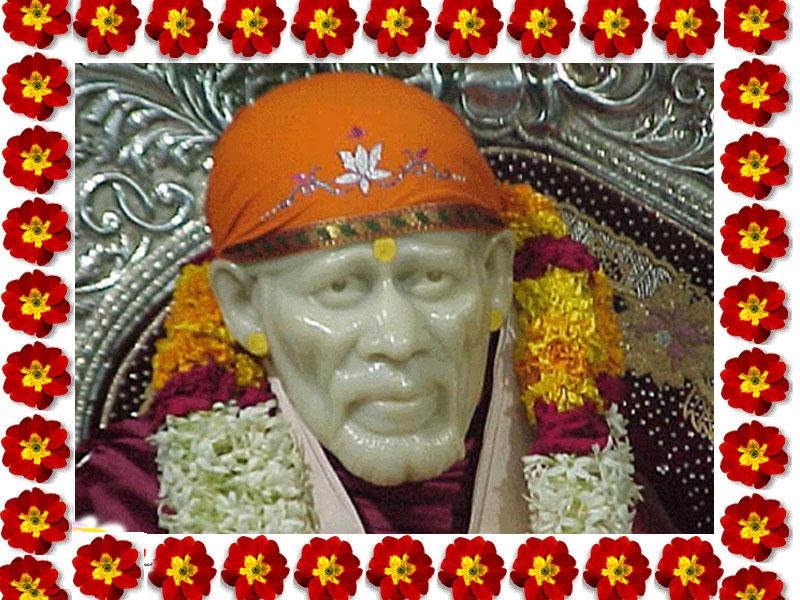 Feature of the week:
Punyatithi Message
Feature of the week:
Punyatithi Message
In chapter 47 of the "Shri Sai Satcharitra" written by Late Shri Govind Raghunath Dabholkar (Hemadpant), there is a story told by Shri Sai Nath Maharaj to one of his devotees. Baba has depicted the story as His own experience with two characters - Veerbhadrappa (a snake) and Bassappa (a frog) with whom He had relationship in their earlier lives. As the story goes, Baba once heard the painful sound of a frog, when he was moving in a village. Being moved by the painful sound he searched for the frog and found him on the river shore and saw that a snake was trying to swallow it. Baba had divine capabilities of knowing the past, present and future of all those who came in contact with him. On seeing the snake and the frog in the situation of deadly animosity, he tried to separate them by reminding them of their inimical relationship in their past life. Baba told the snake i.e. Veerbhadrappa, that he and the frog had killed each other in the past life due to a bitter rivalry. As a consequence of their evil deeds, they were born in the form of a snake and a frog and since their evil thoughts against each other had been carried forward to the present life, they were unconsciously propelled to restart the fight in this manner. He advised the snake to let go of the frog so that the seed of enmity between them brought forward from the past life is not carried forward to the next life. Listening to what Baba said, Veerbhadrappa (the snake) released the frog (Bassappa) who jumped to the river and escaped. This depiction is in the style of a beautiful parable told to children in Hindu folklores. However, an in-depth understanding would reveal that Shri Sai Nath Maharaj was propounding the basic tenets of "Karma" (Karma Theory) of Indian Spiritual Science. The first principle is that the reactions of actions (good and evil both) of the past lives are bound to come into play in the next life (or lives). Those with whom one had good relationship in the past life will be friends in the next life and those with whom one had bad relationship in the past lives will become enemies. The second principle is that the law of nature through its unseen mechanism will bring them together and precipitate the good or bad events as ordained from the past. The third principle is that due to the play of "Maya" (Human Illusions created by nature) such human relationships will be established in the form of any social relationship e.g. friend - friend, brother - brother, husband - wife, master - servant, father - son, lover - beloved etc. Such relationship can even be extended to a human being - animals / birds relationship or animal - animal relationship. Baba was categorical in making the statement that no one develops some sort of a relationship with another person unless there has been a relationship brought forward from previous life (lives) even if one doesn't remember the past life experiences. In our daily life we experience that many a times the so called social relationships lead to unpleasant /acrimonious events. We also experience that sometimes person(s) with whom we have no family /social relationships become our best friends. History is full of such instances of bitter animosity between fathers and sons, brothers and brothers, husbands and wives leading to a miserable state of existence and mutual destruction. Unless something is done in the current life of the individuals to end this continued state of antagonism, it will spread over few lives more. Shri Sai Nath Maharaj therefore prescribed to the snake and the frog that they should not indulge in further actions of rivalry and that they should wipe-out the evil thoughts towards each other to burn the seed of antagonism. This is what most of the spiritual masters like Lord Buddha and Christ preached and practiced. In short, the principle is to "Forgive and Forget". Many people try to practice this principle as advised by the masters in their life. However, problems arise and the best benefit doesn't accrue to them due to limited or partial understanding of this concept. In a set of relationships people mostly try to adjust because of certain social /economic compunctions and forgive the actual or perceived injustice they think has been committed against them. Some people at times think that they have forgiven when actually they haven't. The act of forgiving can never be complete without forgetting. Such acts of forgiveness can at best be termed as temporary solutions because usually in unguarded or stressful moments the old negative thoughts re-appear with double vengeance. It is difficult to forgive others when one thinks that he is totally correct or is less blameworthy than the other person who is totally wrong or mostly blameworthy. It is more difficult for the person whose memory is more intense and long lived to re-adjust /forgive his actual or perceived adversary. It is easier for simple, egoless or light hearted people to wash-out the feelings of hurt and naturalise / normalise the course of life. The more the grudge one carries against someone, consciously and sub-consciously, the more miserable he becomes, cloistered in the cave of his memory. Psycho-analysis reveals that if one person intensely and continuously picturises another person as his enemy, the other person, even if he is not his enemy, will gradually develop adverse feelings towards the originator of such negative thoughts. This is the most common method of creating enemies through our sub-conscious thought process. Similarly by generating positive thoughts towards others one can create friends. "I can forgive, but I can't forget, is only another way of saying, I will not forgive. Forgiveness ought to be like a cancelled note - tore in two and burned up, so that it never can be shown against one" - Henry W. Beecher. And Mahatma Gandhi said "the weak can never forgive. Forgiveness is the attribute of the strong". In view of what has been stated, one cannot but agree with the prescription of Shri Shirdi Sai Baba given to His devotees while narrating the story of Veerbhadrappa (a snake) and Bassappa (a frog). The only way to get mental peace and evolution in life is to control the negative thought processes generated in our mind so that one doesn't create further negative 'Karma' which one has to suffer in the same life or the next chain of lives. May Shri Sai bless us all to get out of our negative 'Samskaras' reflected in our thoughts and consequential activities. Jai Shri Sai. (A message by Shraddheya Shri C.B.Satpathyji)
Contributed Article: Vijaya Dasami
Vijaya Dashmi is celebrated by the Hindus to commemorate the victory of the benevolent forces of nature, mythologically depicted in the form of Goddess "Durga" against the evil forces of nature depicted in the form of demon "Mahishasura". This day is celebrated mirthfully because it gives us the assurance that ultimately good prevails over evil and, therefore, there is a meaning to our existence. For the devotees of Sri Sainath of Shirdi it is a day of greater significance because Baba left His gross body on this day falling on the 15the October in the year 1918. On the Dussehra day of 1916 Baba had clearly indicated that two years later He would leave His gross body. Surprisingly, the 15th October 1918 also happened to be the day of Moharram. The departure of Baba on such a day was symbolic of His universal approach to human problems cutting across all religions, nationalities, castes, social differentiation and all such man?made barriers.
Dussehra also used to be celebrated as the day of "Seema Ullanghan" meaning the day of crossing of the borders. The Kings used to cross the physical boundaries of their kingdoms and celebrate victory. In 1916 on Dussehra day Baba told a group of devotees that he would undertake His 'Seema Ullanghan' two year later. Exactly two years later Baba crossed His bodily existence and entered into His permanent abode of Sat Chit Anand. At His stage of divinity He only consciously changed a state of existence as per His own will. In the path of spiritualism "Seema Ullanghan" does not mean only a state of physical change but it means 'transcendence'. We often hear of words like 'transcendental meditation' and 'transcendental yoga'.
Transcendence of what? Transcendence of the fetters of body and mind. This can only be achieved by controlling the compulsions of body like hunger, lust, and the mental compulsions of mind like greed, jealousy, anger, hatred etc. (the six limitations). When one by one the mental fetters falloff, two elements of mind like 'desire' and 'feeling' pertaining to those compulsions also vanish. The soul slowly but imperceptibly then enters into a state of pure consciousness. At this stage he goes beyond all bodily fetters, including birth and death. He also crosses the barriers of time and space. The progress in the path of spirituality is the march of the divine consciousness from its primordial state to the original divine self.
Through various acts, advices and examples, Baba advised His children to follow the path of dharma, which means transgressing the limitations of our small 'ego'. On this day, keeping in mind Baba's advice we may strive to undertake "Seema Ullanghan" of the limitations of our mind and body, so that we can forge ahead to plant better tomorrow for the posterity.
Sai Devotee Sai Devotee Havovi Medora Deepa Sunil Bimal Vyas Devotee Savithri Meenakshi Teresita Vasudevan Devotee
Quotation of the Week:
"The Guru is always hidden in the disciple. When the worldly covers are taken out the real image of the Guru is seen in the disciple. There is no difference between the disciple and the Guru as they live in each other."-C.B.Satpathy
What is the significance of chapter 15 of Sri Sai Satcharitha? A. by Rajeev The significance is that Sai Baba is omniscent, he knows the devotion, love, and faith his bhaktas have, that Baba is always there with us in our good and bad times and we should not think that he is not there with us. With sincere Faith & Patience Baba answers everybody's prayer. I have been reading for past one and half year Sai Satcharitha regularly with few breaks in between, which gave me beautiful insights which enabled to make my life much more happier and better. I would suggest that one should read Sai Satcharitha and make a discipline of atleast reading one chapter everyday no matter what, if you have the faith, you will be surprised that everything falls in place making it possible to read Sai Satcharitha. Shree Sachithanand Sadguru Sainath Maharaj Ki Jai. What is the significance of chapter 15 of Sri Sai Satcharitha? A. by by Manav Sharma Chapter 15 in Sai Satcharita, tells about Baba's presence around devotee all the time. Baba Says "If you spread your palms with devotion before Me, I am immediately with you, day and night. Though, I am here bodily, still I know what you do; beyond the saven seas. Go wherever you will, over the wide world, I am with you. My abode is in your heart and I am within you. Always worship Me, Who is seated in your heart, as well as, in the hearts of all beings, Blessed and fortunate, indeed, is he who knows Me thus."
Navarathri and Punyatithi Celebrations in Chicago - Oct 7th to Oct 9th Sri Saibaba Mandir, Minneapolis, MN Sri Shirdi Sai Baba Temple of Dallas/Fort Worth, Texas Shirdi Sai Temple of New England, Boston Area Shirdi Sai Center in Bay Area, CA Shirdi Saibaba temple, Los Angeles, CA Saibaba Temple, Columbus, Ohio Shirdi Sai bhajans every Thursday at Maitland, Florida Sri Shirdi Sai Temple of Austin, TX Shirdi Sai Mandir, Dulles, VA Shirdi Sai Mandir, Toronto
|

© 1996-2008 by saibaba.org, all rights reserved.
