
|
Sai Vichaar 01.Feature of the Week 02.Contributed Article 03.Experiences of Devotees 04.Devotees Say 05.Sai Activities 06.Prayer Club 07.Quote of the Week 08.Question of the Week 09.Subscribe to Sai Vichaar 10.Email Newsletter to a friend 11.Submit Articles to Sai Vichaar 12.Un-Subscribe Sai Vichaar 13.From the Editor's Keyboard 14.Disclaimer From the Editor's Keyboard... In the true spirit of Sai devotion, contributors are requested to remember the global nature of Sai Vichaar readership. Therefore, the content, language, style and presentation, appropriate to a worldwide readership will be more rewarding and fulfilling. It should also be noted that when a section from any material other than their own is quoted or referred to, it is the authors' responsibility to acknowledge the source appropriately. The "Question of the week" for this week is The Post Script to Chapter 15 of Sri Sai Satcharitha states that those those who respectfully read this Chapter or study it daily, will get all the miseries removed by the grace of the Sadguru Sai Baba. What is the significance of this chapter? Humbly Yours, The Editor
Disclaimer Sai Vichaar is devoted to the philosophy and teachings of Shri Sadhguru Sai Baba of Shirdi, and will take every measure to avoid topics or themes contradicting the same. Sai Vichaar team or saibaba.org is not responsible for the opinions expressed by individual contributors.
|
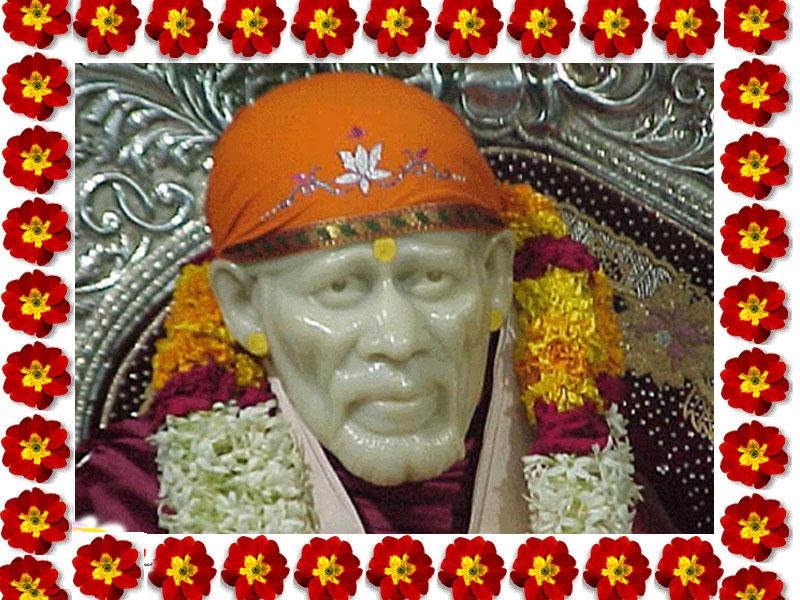 Feature of the week:
Those wealthy!
Feature of the week:
Those wealthy!
What Sri Sai gives to His children is a uniquely referred feature. Baba often dissuaded those who always scrupulously ascribe a "spiritual" tone to those who flocked to Baba those days or even today. However, if this topic is viewed in light of one's desires and wants, it will be known that the desires are endless and it takes a firm resolve to pursue further on what the God of Shirdi truly wants to give. The following from author Kevin Shepard's biography on Saibaba of Shirdi discerns the true disciples from others such as visitors, hangers-on or even devotees. "One of Saibaba's famous sayings is:" I give people what they want in the hope that they will begin to want what I want to give them". The context has so far been largely neglected in the posthumous revelations of the Shirdi revivalists. The recipients of the money, which Saibaba took from visitors, were often "those who were not always worthy". These were individuals who came to Shirdi in the hope of attaining material benefits. It evidently suited the sense of humor of the adept to treat them accordingly in his redistribution feat. Spectators could make of it what they wished, but it would not have been the only site where "fleas" congregated. It is reported that one recipient would receive as much as hundred rupees daily, and that he used the fund to "live well and sumptuously", though he was also able to support his large family. In contrast, Saibaba was very ascetically demanding of those who were his disciples. These latter were a minority, and quite distinct from the devotees, visitors, and hangers-on. The young Zoroastrian Gustadji Hansotia also lived in Shirdi, but was never given any money, received only scant food, and in general was denied even simple amenities like clothing and blankets. It remains to add that "those who were not always really worthy" would not have conceived of their presence in such terms, but instead would doubtless have described themselves as disciples of the Shirdi master. If this was liable to have confused those for whom surface appearances were ultimate yardsticks, the discernment of parasitic elements is nevertheless a useful; exercise for those in desperate need of it"
Contributed Article: Rituals
Ritual, if seen from outside the realm of religion, is nothing but a set of practices conditioned by culture and convenience. Rituals are important means of communicating with Sadguru who is none else than God. For the mind immersed in logic, outwardly, rituals may appear as superficial practices, but they impart a definite structure to the way a saadhaka conditions himself/herself to communicating with the Sadguru. Rituals slowly but surely transform one giving the rare opportunity of having Sadguru's glimpse in one's own personal way.
Sai devotion may appear to pose a unique challenge to any onlooker drawn into the Shirdi God's fold. What rituals are to be performed? How are they performed? Must one always perform all the aarthis to Baba? Should one participate in Satsangs? Is it just enough to do naam jap? Or is it mandatory to perform shodasopachaara pooja to Saibaba of Shirdi? Is abhishek to Baba is a Hindu ritual and if so, is it OK to structure Baba's prayers within the conforms of a particular religion?
How does one reach the Sadguru God of Shirdi who refuses to fit into a religion? The answer is simple; through any structured practice with love, truth, honesty and an intense yearning to understand the nature of Sadguru. Such a practice can be a Hindu ritual as much as Kalma recital. Nevertheless, a structured practice is always useful as discipline is a mandatory phase in pursuit of Sadguru. Nama jap is as powerful a tool for a saadhaka as is performing any other ritual. No one ritual is superior to the other. They all serve the same purpose. Rituals should not be considered as intimidating because of the way they are performed, neither are they a measure of scholarship. Rituals are not compulsive bursts of activities to just fit a timeframe. If there is love and devotion to Sadguru, there are no compulsions. If someone feels compelled, the love and devotion is not complete.
There is a tendency to dismiss rituals as hypocritical since sometimes they are performed without completely knowing what they truly mean. Can this be a reason to stay away from a structured practice? What good meanings can do if the true involvement is just a pretense? Is it possible to know all the meanings behind everything one encounters? Is that not the very reason one seeks the Sadguru? The perception of "bhaavatheeth", the attributeless, through any "bhava" can never be additive function of all the means at our disposal. It is achieved only through Sadguru's grace. Great souls have accomplished this very easily. The all-important experience of Sadguru starts where our "bhava" exhausts.
Saibaba's method of instruction is unique and individualized. Baba never allowed anyone to interfere with the way others' did their service to God. A true Sai satsang is one where there is enormous love and devotion for Baba that sees Sai in every ritual. The love and devotion that is natural and unsolicited. A Satsang that perhaps uses every means and tries to provide everyone the opportunity to realize Sadguru in his or her own way beyond the barriers of language, culture or social status. A Sai devotee always nurtures the above with the intention of sharing his/her love and devotion to His Majesty, the king of the kings and the most benevolent, Sadguru Sainath Maharaj of Shirdi. Bow to Sri Sai Peace be to all.
Rastogi Bala Savithri A devotee Shalini Eugene Anu Devotee Rekha
Quotation of the Week:
"I always think of him who remembers Me. I require no conveyance, carriage, nor train nor aeroplane. I run and manifest myself to him who lovingly calls me."-Shri Sai Baba
What is the significance of chapter 15 of Sri Sai Satcharitha?
Shirdi Sai Temple of Chicago and Suburbs, Illinois, USA Sri Saibaba Mandir, Minneapolis, MN Sri Shirdi Sai Baba Temple of Dallas/Fort Worth, Texas Shirdi Sai Temple of New England, Boston Area Shirdi Sai Center in Bay Area, CA Shirdi Saibaba temple, Los Angeles, CA Saibaba Temple, Columbus, Ohio Shirdi Sai bhajans every Thursday at Maitland, Florida Sri Shirdi Sai Temple of Austin, TX Shirdi Sai Mandir, Dulles, VA Shirdi Sai Mandir, Toronto
|

© 1996-2008 by saibaba.org, all rights reserved.
